
麺のことなら全てお任せください
 テレビ
テレビ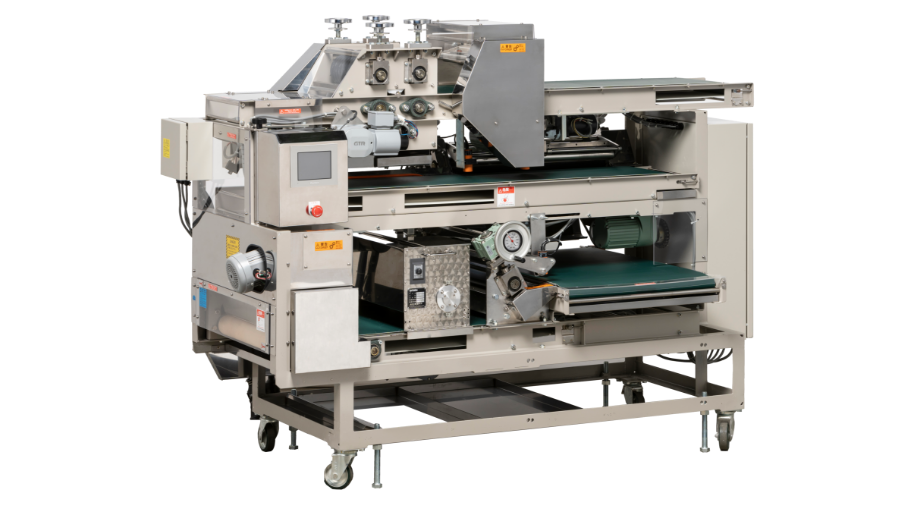
Konpira System No.1
A fully automatic model developed for high-volume production, retaining all the features of the Sanuki Ichiban. Simply load the dough and the machine handles everything through to knife cutting automatically.
Compatible Noodle Types
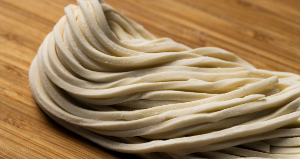
Udon
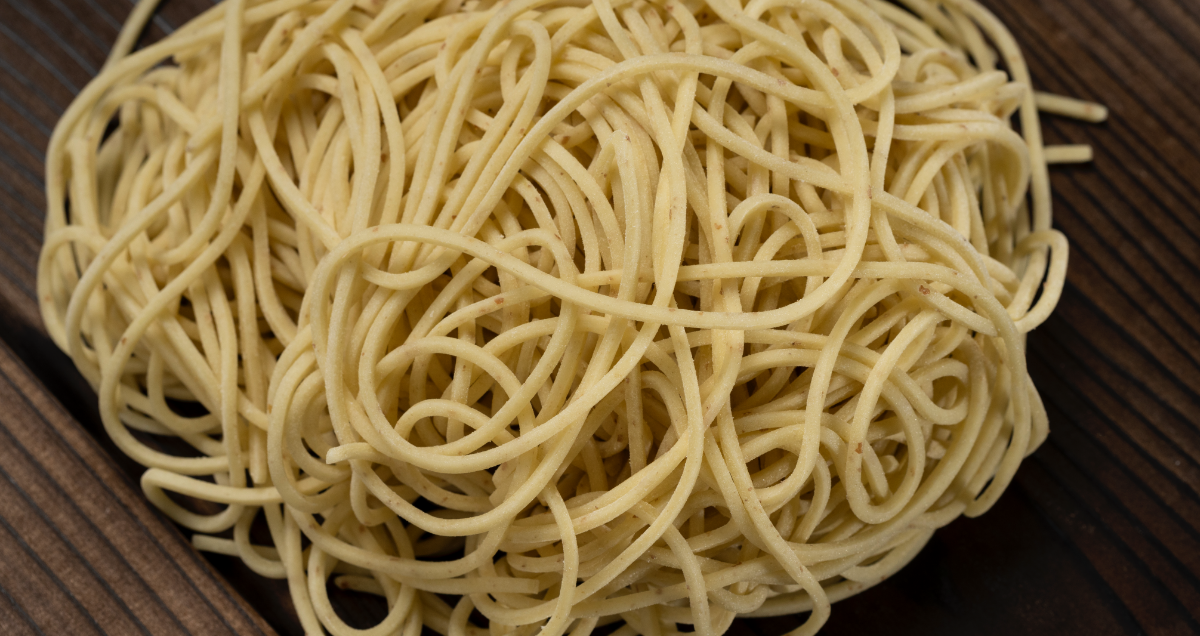
Ramen
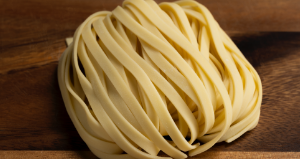
Pasta
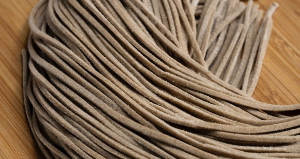
Soba
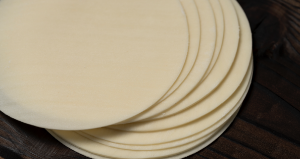
Gyoza wrappers
Noodle-Making Process
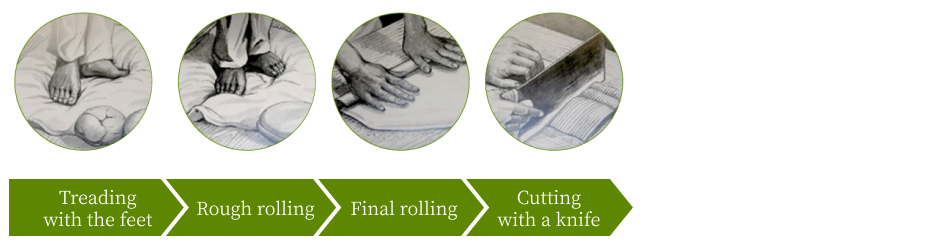
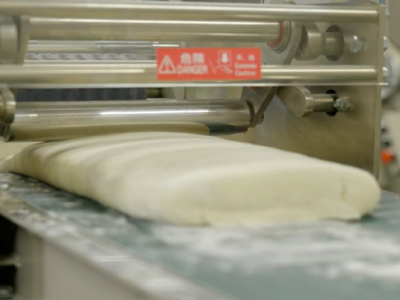
Foot Kneading
A rotary press replicates the foot-kneading process to thoroughly hydrate the dough. By promoting gluten formation deep into the dough, the surface is brought to a smooth finish. The key is to apply gradual pressure equivalent to a person's body weight (approximately 60 kg), without damaging the dough structure.
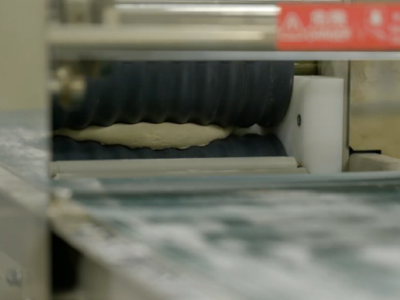
Rough Stretching
The wave roll — born out of the foot-kneading prohibition ordinance and synonymous with Sanuki Menki — was originally used to gently soften straw and was later adapted for conditioning noodle dough. The rough stretching performed with this corrugated roll is not simply about making the dough thinner. By changing direction — lengthwise, widthwise, and diagonally — through kneading and twisting actions, gluten is activated and the mesh-like structure is further strengthened. The spring mechanism also helps distribute pressure evenly, preventing damage to the gluten network.
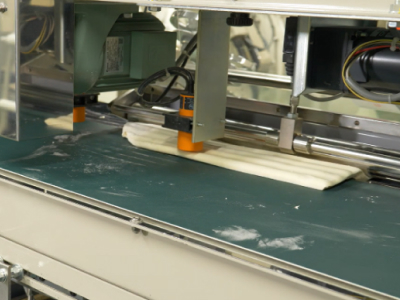
Horizontal Stretching
After rough stretching, the dough is cut to a set length and moves into the next stage: horizontal rolling. Just as handmade noodles are stretched both lengthwise and widthwise, the Konpira No.1 performs the same cross-directional stretching.
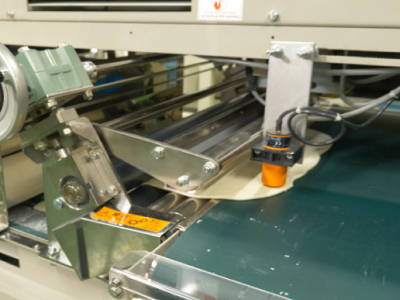
Finishing Stretch
The dough is stretched alternately lengthwise and widthwise along the gluten network, resulting in udon with a soft, chewy texture. Because the rolls are made of resin, the appropriate level of slip replicates the effect of the "sukashi-uchi" technique — a stretching method unique to Sanuki — using a rolling pin. Rather than thinning the dough all at once, it is gradually thinned in up to 9 adjustable stages, making it easy to achieve a uniform thickness.
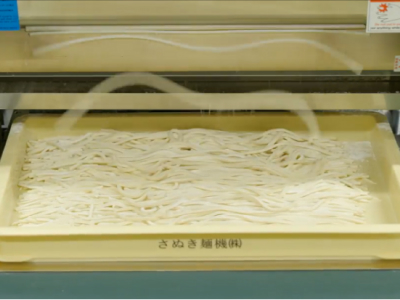
Knife Cutting
Using the same drawing-cut principle as slicing sashimi, this method differs from the push-cut technique — which can damage the dough structure — by cutting without disruption, achieving sharp, well-defined edges that also enhance texture. Compatible with ultra-high-hydration noodles, it operates quietly, causes minimal blade wear, and allows adjustment to your preferred noodle width.