麺のことなら全てお任せください
 テレビ
テレビ.jpg?width=460&height=259&name=%E6%9B%B4%E7%A7%91(%E3%81%9D%E3%81%B0%E5%B0%82%E7%94%A8).jpg)
Sarashina AP (Soba-Dedicated)
A compact all-in-one noodle machine for handmade soba, including a kneader, rolling press, and Sarashina-P. Even 100% buckwheat soba is easy to make!
Compatible Noodle Types
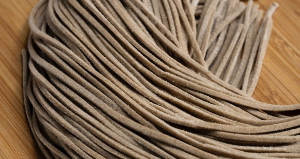
Soba
Noodle-Making Process
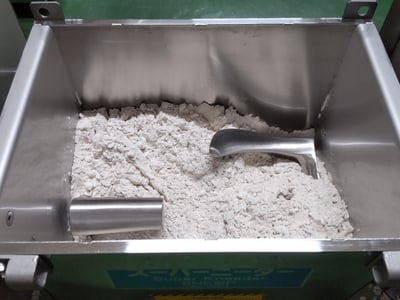
Kneading (Neri)
Kneading is so fundamental that it is said to determine the quality of the noodle. Our proprietary blade mechanism faithfully replicates hand-kneading by creating zones of pressure and release. From hydration through kneading, it evens out any inconsistencies in moisture distribution, resulting in a smooth, uniform dough.
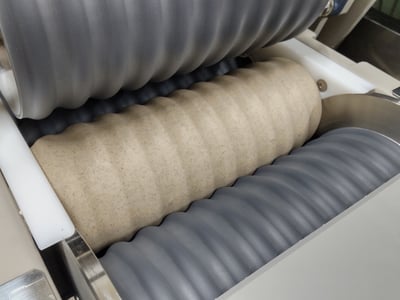
Kikumomi (Chrysanthemum Kneading)
Kikumomi is an essential step that plays a critical role in the processes that follow. By rotating the dough while removing air and applying pressure, the kikumomi effect reaches all the way to the interior of the dough.
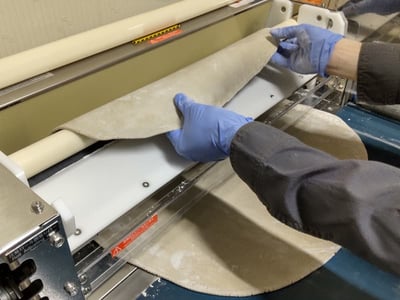
Finishing Stretch
Just like a handmade noodle artisan, the 2 kg dough ball is wrapped around a rolling pin and gradually stretched in stages. Because soba dough tears easily and requires delicate handling, the roll's rotation speed, shape, and material are carefully designed to minimize friction and allow for a gentle, even finish.
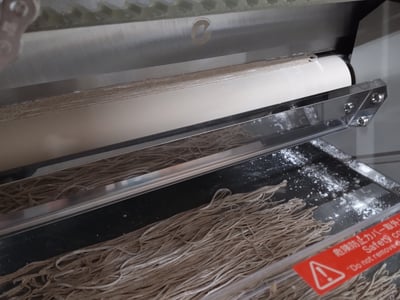
Knife Cutting
Using the same drawing-cut principle as slicing sashimi, this method differs from the push-cut technique — which can damage the dough structure — by cutting without disruption, achieving sharp, well-defined edges that also enhance texture. Compatible with ultra-high-hydration noodles, it operates quietly, causes minimal blade wear, and allows adjustment to your preferred noodle width.