
麺のことなら全てお任せください
 テレビ
テレビ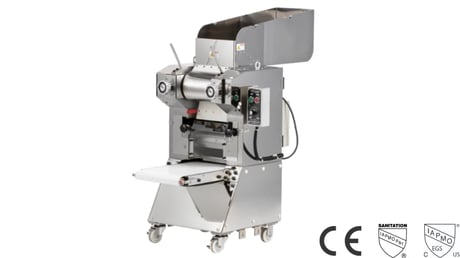
Top Noodle TP-1P
A compact roller-type noodle machine used around the world. A versatile model capable of producing ramen, udon, soba, pasta, and gyoza wrappers — all in one machine.
Beautiful Noodle Sheet Quality
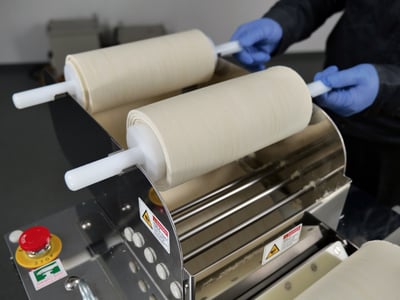
The dough finished in the kneader is passed through the rolls to form the noodle sheet.
Our flanged rolls produce exceptionally clean edges on both sides of the noodle sheet, resulting in minimal waste. The interlocking flanges ensure the dough is firmly formed, contributing to higher noodle quality.
Compatible Noodle Types
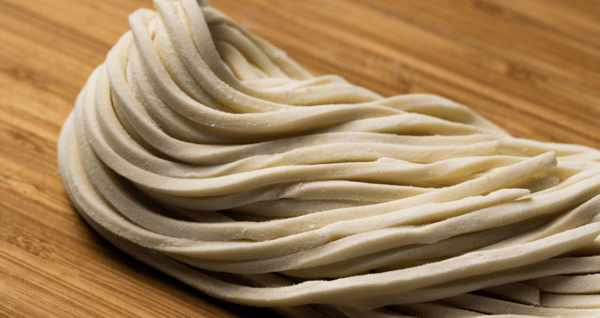
Udon
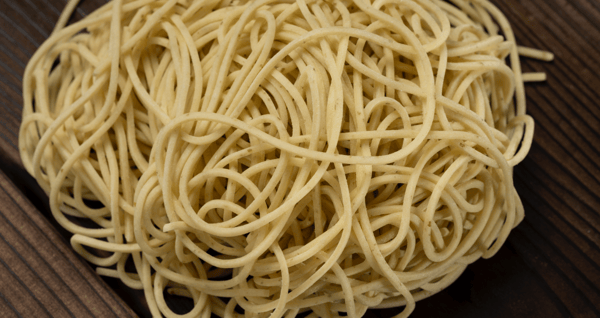
Ramen
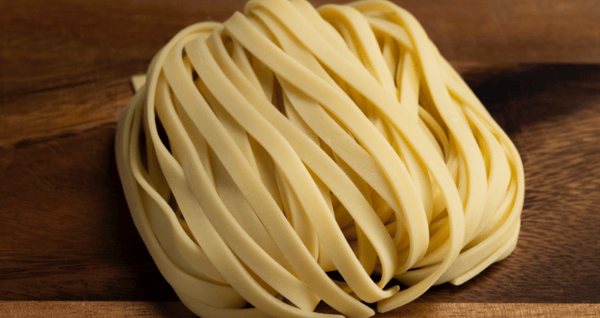
Pasta
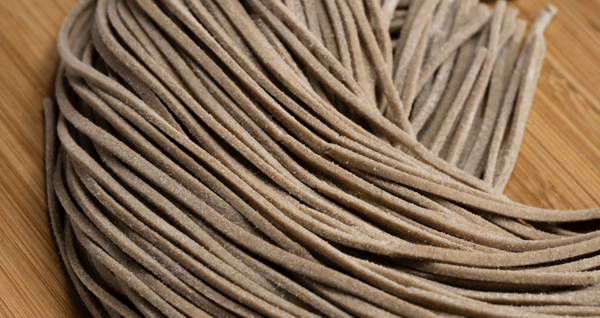
Soba
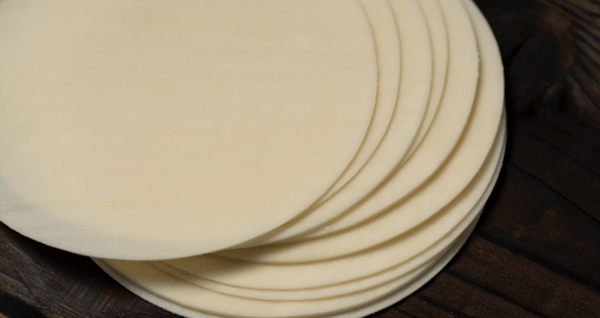
Gyoza wrappers
Noodle-Making Process (Roller-Type Machine)
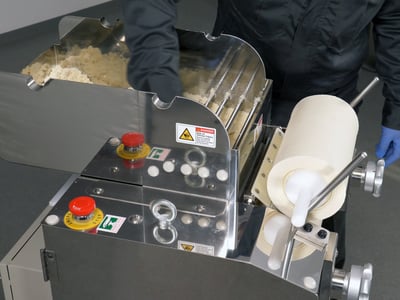
Step 1: Sheet Formation
After mixing, the dough consists of small granules. Rolling compresses these into a flat sheet. The rolled-up sheet of dough is called the noodle sheet (mendai).
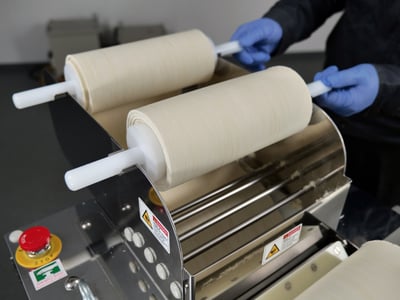
Step 2: Sheet Lamination
The freshly formed noodle sheet is still fragile and prone to tearing. To strengthen it, two sheets are layered together to form one. This lamination increases the number of layers, creating a stronger, more resilient noodle sheet.
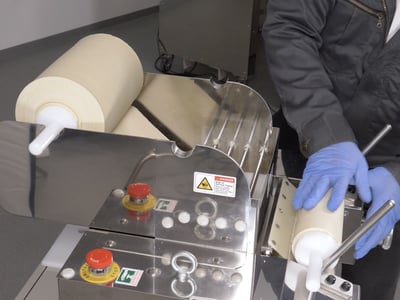
Step 3: Sheet Rolling
After lamination, the noodle sheet is gradually thinned. Rolling too quickly would damage the gluten structure, so the sheet is stretched progressively until it reaches the desired thickness.
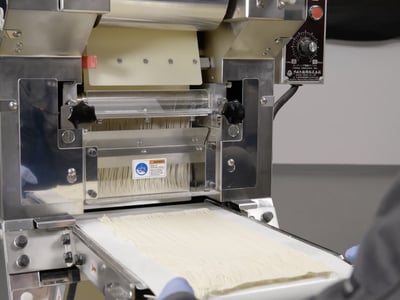
Step 4: Cutting
The noodle sheet, now at the desired thickness, is cut into noodle strands. This is done by passing the sheet through a cutting blade (similar to a shredder) attached to the machine. By swapping in blades with different widths, noodles of various sizes can be produced.
.jpg)