Our Products

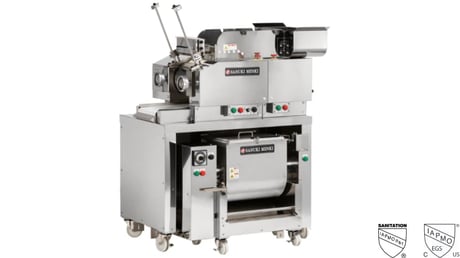
Top Noodle TP-2P

トップヌードル TP-2型-1

Top Noodle TP-2P

  • その他
A mid-size roller-type noodle machine with expanded capabilities over the TP-1P. In addition to improved workability, it enables the production of high-hydration noodles that were difficult to achieve with the TP-1P.

Features

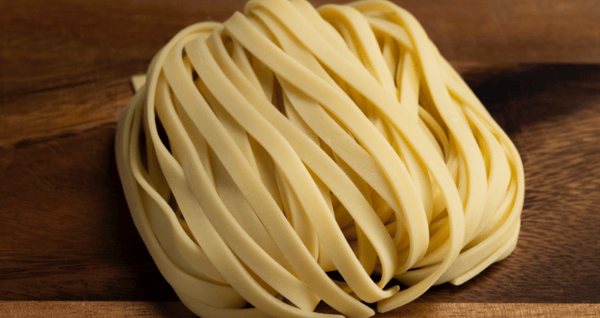
The noodle strand output is positioned at a height of 850 mm, allowing operators to work comfortably whether standing or seated, reducing physical strain. The larger roll diameter enables the production of high-hydration noodles that were difficult with the TP-1P. Roll speed can be switched, allowing rolling and cutting to be performed simultaneously — improving efficiency and reducing production time. Capable of cutting noodles of any width, from thin Hakata ramen to thick Sanuki udon. An automatic portioning function controls the weight per serving. Models certified to North American safety standards UL/NSF and CSA are also available.

Beautiful Noodle Sheet Quality

麺帯生地の美しさ


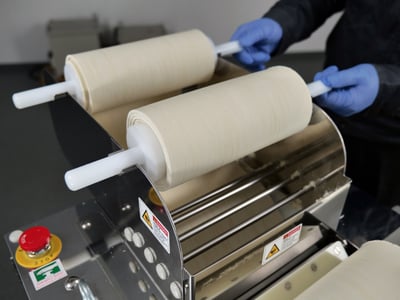
The dough finished in the kneader is passed through the rolls to form the noodle sheet.

Our flanged rolls produce exceptionally clean edges on both sides of the noodle sheet, resulting in minimal waste. The interlocking flanges ensure the dough is firmly formed, contributing to higher noodle quality.

Compatible Noodle Types
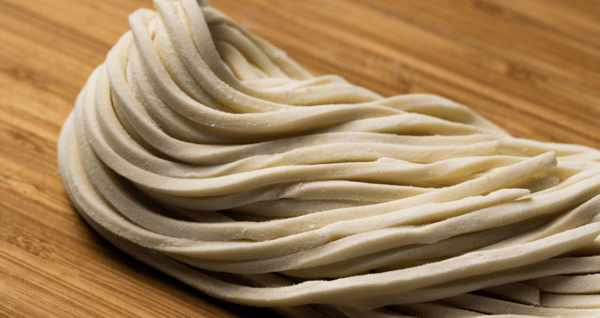
udon-1

Udon


ramen-2

Ramen


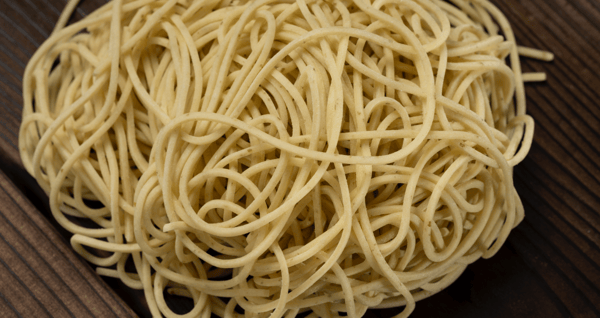
pasta

Pasta


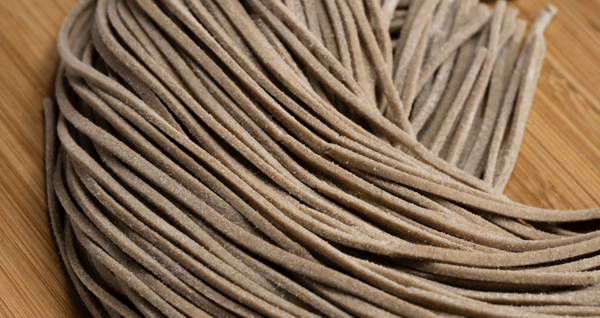
soba

Soba


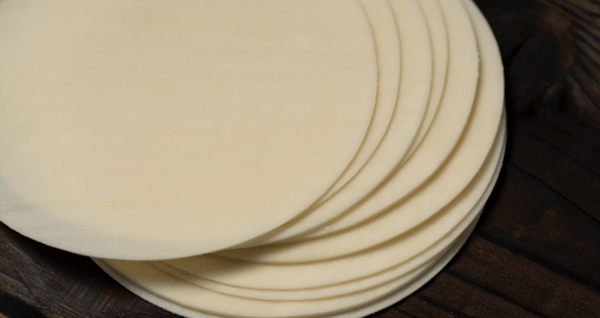
Gyoza

Gyoza wrappers


Key Specifications

Noodle Production Capacity
200–500 servings/hour
Water Content
26%–46% (*varies by recipe)
Rolling Method
Roller-type one-directional rolling
Cutting Method
Cutting blade

Noodle-Making Process (Roller-Type Machine)
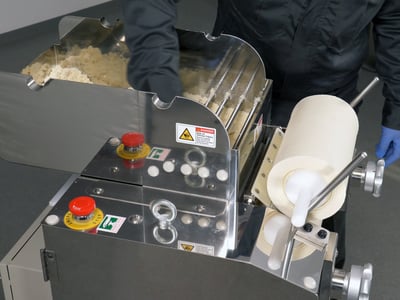
麺帯形成


Step 1: Sheet Formation

After mixing, the dough consists of small granules. Rolling compresses these into a flat sheet. The rolled-up sheet of dough is called the noodle sheet (mendai).
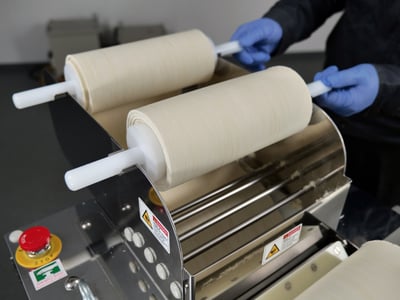
 

麺帯複合


Step 2: Sheet Lamination

The freshly formed noodle sheet is still fragile and prone to tearing. To strengthen it, two sheets are layered together to form one. This lamination increases the number of layers, creating a stronger, more resilient noodle sheet.
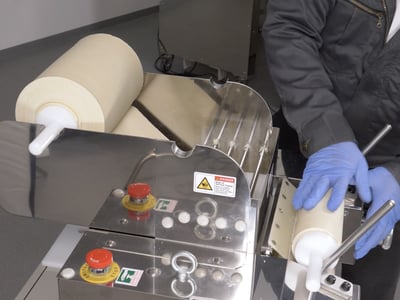
麺帯圧延


Step 3: Sheet Rolling

After lamination, the noodle sheet is gradually thinned. Rolling too quickly would damage the gluten structure, so the sheet is stretched progressively until it reaches the desired thickness.
切出し


Step 4: Cutting

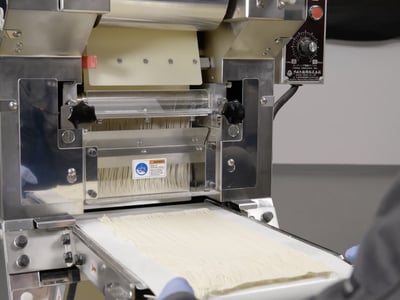
The noodle sheet, now at the desired thickness, is cut into noodle strands. This is done by passing the sheet through a cutting blade (similar to a shredder) attached to the machine. By swapping in blades with different widths, noodles of various sizes can be produced.


Product Specifications

Product Name Kneading Machine Dimensions (WxDxH) Weight Power Consumption Voltage Frequency
TP-2P Selected Separately 1100×900×1326 mm 360 kg 980 W 3Φ200 V 50 Hz
TP-2UL Selected Separately 1100×900×1326 mm 360 kg 980 W 3Φ230 V 60 Hz

Material download


Top noodle series


Download

Backed by a long history, Sanuki Menki has the knowledge and experience to help you.
For any questions or concerns related to noodles, we are here to help.